
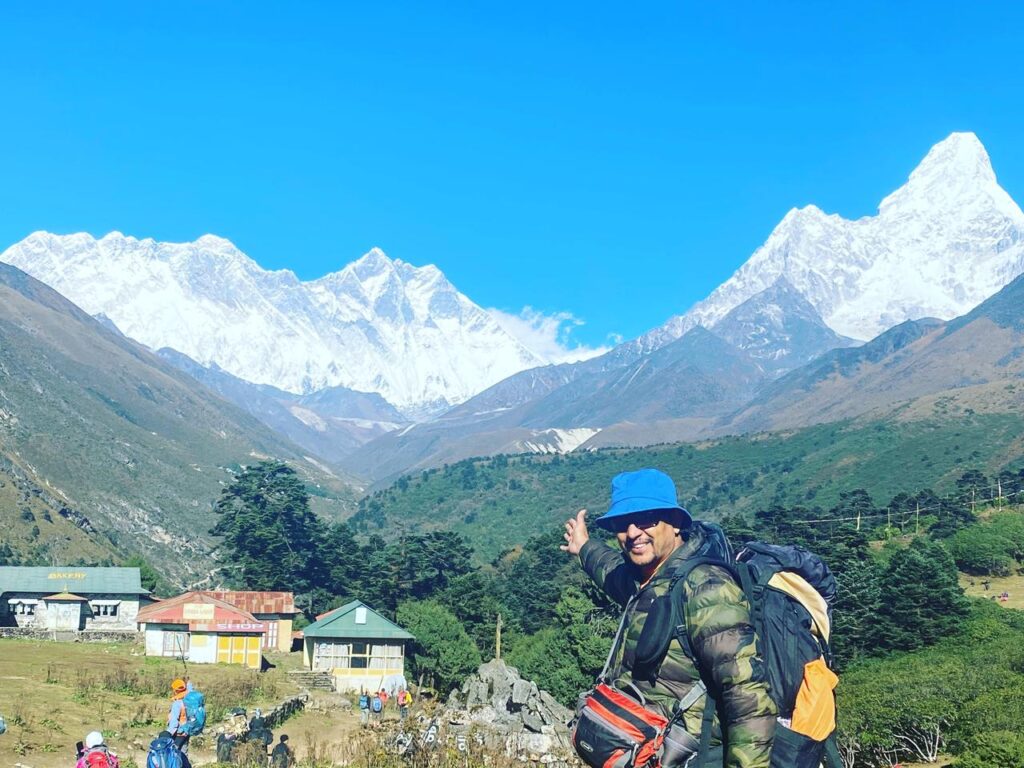
If you have never done a multi-day teahouse trek, the daily rhythm can feel mysterious. What time do you wake up? What do you eat? How many hours do you actually walk? This guide walks you through a typical day on a Nepal tea house trek, hour by hour, so you know exactly what to expect from your first morning in Phakding to your last sunset at Gorak Shep.

6:00 AM: Wake-Up Call
Most teahouse days start early. A staff member knocks on your door with a thermos of “bed tea” — hot black tea with milk and sugar, sometimes lemon or ginger. This is the gentlest wake-up in trekking. You have 30 minutes to pack your duffel, brush your teeth, and dress in layers before breakfast. Mornings are cold above 3,500 m, so start with a base layer, fleece, and down jacket; you will strip down to a single layer by 9 AM when the sun hits the trail.
6:30-7:30 AM: Breakfast
Breakfast on a Nepal teahouse trek is substantial. The standard menu includes Tibetan bread with honey or jam, porridge with apple and cinnamon, pancakes (banana, apple, or chocolate), eggs any style with hash browns, and endless refills of tea or coffee. Order the night before so the kitchen has your meal ready by 7 AM. Most trekkers eat a double breakfast: porridge plus pancakes, or Tibetan bread plus eggs. This is your fuel for 5-6 hours of walking.
Ordering the night before is critical because kitchens run on kerosene or yak dung, which take time to heat up. If you wait until morning to order, your breakfast may take 45 minutes, which delays your whole day. Always pre-order both dinner (for that night) and breakfast (for next morning) when you check in to the teahouse.
7:30 AM-12:00 PM: Morning Walk
The morning walk is the main event of the day. You typically walk 4-5 hours before lunch, covering 8-12 km and gaining 500-800 m of altitude. The pace is slow and steady to manage altitude — about 300-400 m/hour of ascent. Your guide sets a comfortable pace; if you cannot hold a conversation while walking, you are going too fast. Stop every hour for a 5-minute water and snack break. Drink at least 3-4 liters of water per day to aid acclimatization.
Trails in Nepal are well-marked but vary dramatically: paved stone steps, dirt tracks through forests, suspension bridges over glacial rivers, scree slopes, and high pastures. You will share the trail with yaks, mules, porters, and other trekking groups. Always yield to yaks and porters on narrow sections; press yourself against the uphill side of the trail. For more on trail etiquette, see our responsible trekking guide.
12:00-1:00 PM: Lunch Stop
Lunch is at a trailside teahouse, usually reached after 4-5 hours of walking. The standard lunch is dal bhat (rice, lentil soup, vegetable curry, pickle, and unlimited refills), fried rice, chowmein, or Sherpa stew. Dal bhat is the most popular choice because it is cheap, nutritious, and refilled for free. Lunch takes about an hour, including ordering, cooking, and resting. This is also your chance to refill water bottles, use a flush toilet, and check your phone for signal.
1:00-4:00 PM: Afternoon Walk to Teahouse
After lunch, you walk another 2-3 hours to your overnight teahouse, gaining another 300-500 m. The afternoon walk is usually shorter and more relaxed, with frequent photo stops. You typically arrive at the teahouse between 3 and 4 PM, giving you time to settle in before dark. Choose a room, claim a bed, unpack your sleeping bag, and change into camp shoes.
4:00-6:00 PM: Acclimatization and Rest
The golden rule of altitude trekking is “climb high, sleep low.” After arriving at the teahouse, drop your daypack and do a short acclimatization walk: climb 100-200 m above the teahouse, then come back down to sleep. This helps your body adjust to the altitude. Back at the teahouse, order tea, sit in the sunny dining hall, journal, read, or chat with other trekkers. Most teahouses have a wood stove in the dining hall that is lit at 5 PM. This is the social heart of the evening.
6:00-7:30 PM: Dinner
Dinner is ordered around 6 PM and served between 6:30 and 7:30 PM. The menu is similar to lunch: dal bhat, momos (Nepali dumplings), pasta, pizza, soups, and Sherpa stew. Most trekkers have soup first, then a main dish, then tea. After dinner, your guide briefs you on the next day’s plan: wake-up time, breakfast order, trail conditions, and altitude gain. This is also when you settle your teahouse bill for extras (showers, charging, Wi-Fi, drinks).
After dinner, the dining hall goes dark around 8:30 PM as the teahouse conserves electricity. Most trekkers are in their sleeping bags by 9 PM. Temperatures drop sharply after sunset, so wear thermal base layers, a fleece, and warm socks to bed. Stuff tomorrow’s clothes inside your sleeping bag so they are warm when you put them on. See our teahouse price guide for what dinner costs at different altitudes.
Acclimatization Days: A Different Rhythm
Every 1,000 m of altitude gain, you take a rest day for acclimatization. On these days, you sleep in until 7 AM, have a leisurely breakfast, then do a day hike to a higher viewpoint (climb high, sleep low). Popular acclimatization hikes include Nangkartshang Peak from Dingboche (EBC trek), Ice Lake from Manang (Annapurna Circuit), and Manaslu Base Camp from Samagaon (Manaslu Circuit). You return to the same teahouse for the night. Acclimatization days are not rest days — they are active adaptation days, and skipping them is the #1 cause of altitude sickness.
Frequently Asked Questions (FAQ)
How many hours a day do you walk on a Nepal tea house trek?
Typically 5-7 hours of actual walking, broken into a 4-5 hour morning session and a 2-3 hour afternoon session with a 1-hour lunch break. Above 4,000 m, daily altitude gain is limited to 300-500 m for acclimatization. On acclimatization days, you may only walk 2-3 hours.
Is the walking difficult on a Nepal tea house trek?
It depends on the route. Annapurna Base Camp and Langtang Valley are moderate. EBC, Annapurna Circuit, and Manaslu Circuit are challenging due to altitude and long days. Trail surfaces are mostly well-maintained stone steps and dirt paths. No technical climbing is required on standard tea-house treks.
Do I have to walk at the same pace as my group?
No, you can walk at your own pace within reason. Your guide will set a slow pace for the group; faster walkers can go ahead but should wait at trail junctions. Solo walkers must check in at every checkpoint. Never walk alone above 4,000 m in case of altitude sickness.
What do I do in the evenings on a Nepal trek?
Most evenings are spent in the teahouse dining hall around the wood stove. Activities include journaling, reading, playing cards, talking with other trekkers, learning Nepali phrases from your guide, and drying gear. Some teahouses have Wi-Fi (for a fee) or a small library of paperback novels.
Ready to experience a typical day on a Nepal tea house trek? Book with Trek Pathways for fully-organized teahouse treks on the Manaslu Circuit, Everest Base Camp, or Annapurna Circuit. Your guide handles every detail.

 English
  Deutsch
  Français
  Português
  Español
0 Comment