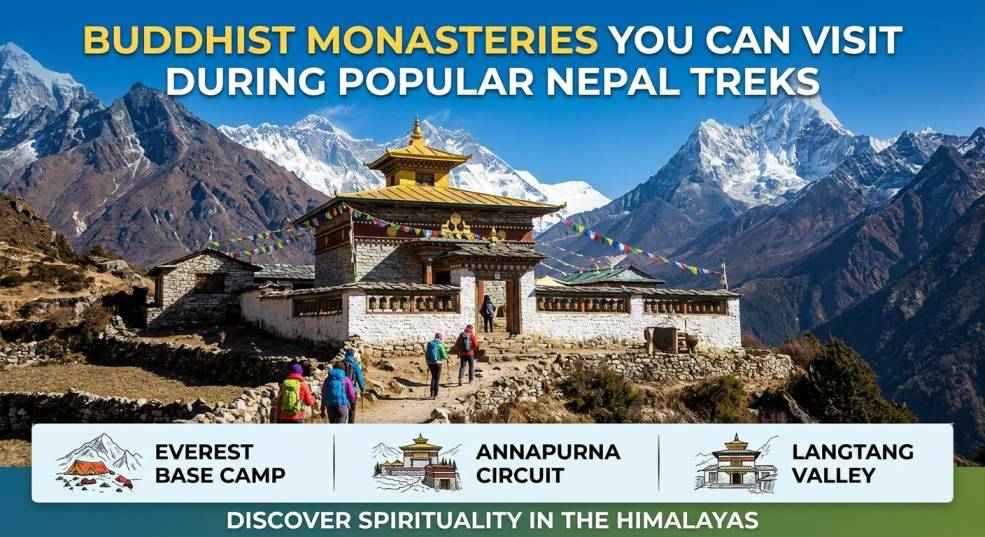
Nepal is the birthplace of Buddha and a heartland of Tibetan Buddhism. The high Himalayan regions — Khumbu, Manaslu, Mustang, Dolpo — are dotted with centuries-old monasteries (gompa) where monks chant, prayer wheels spin, and the air smells of juniper incense. Visiting a monastery during your trek is one of the most rewarding cultural experiences in Nepal. This guide covers the most beautiful Buddhist monasteries accessible from popular trekking routes.

Tengboche Monastery (Everest Region)
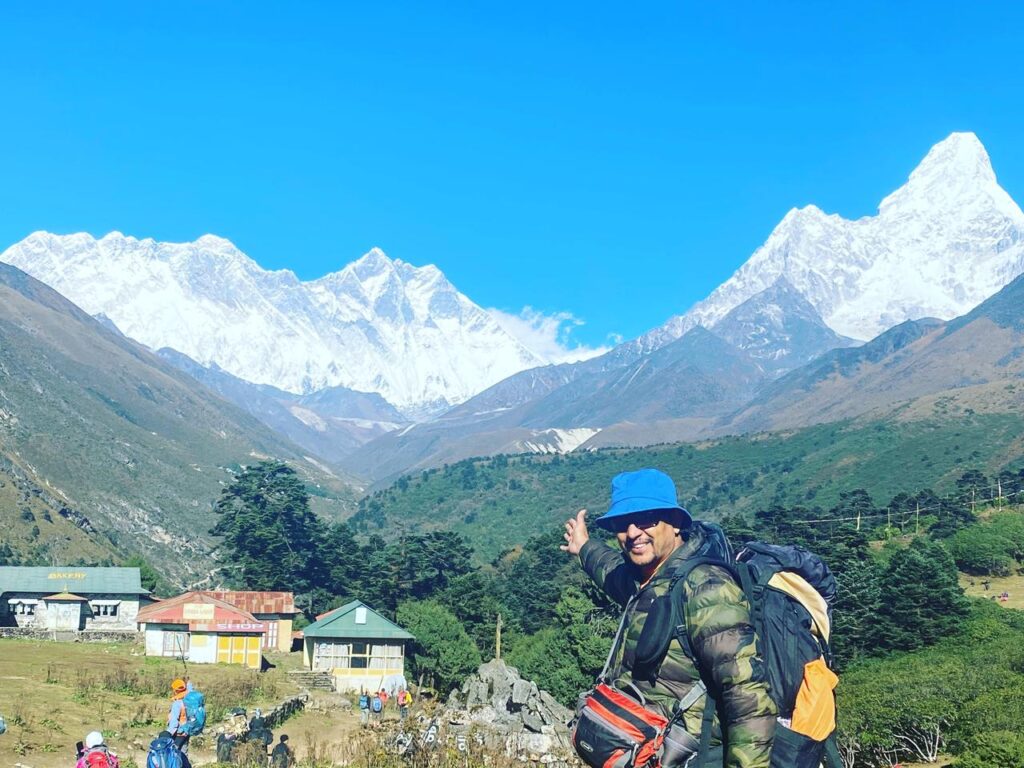
Tengboche (Thyangboche) Monastery is the spiritual heart of the Khumbu region, perched at 3,867 m with sweeping views of Everest, Nuptse, Lhotse, and Ama Dablam. Founded in 1916, it is the largest Buddhist monastery in the Khumbu and home to about 60 monks. Trekkers on the EBC route pass through Tengboche on day 5 of the trek, and most stop for the morning puja (prayer ceremony) at 6:30 AM. Photography is allowed outside but prohibited inside the main prayer hall without permission.
Tengboche hosts the annual Mani Rimdu festival in October-November, a 19-day series of sacred masked dances celebrating the victory of Buddhism over Bon. The festival culminates in a public performance on the third day. If your EBC trek coincides, it is one of the most profound cultural experiences in Nepal. See our festivals guide for dates.
Notable Monasteries on Each Trekking Route
| Monastery | Trek | Altitude | Founded | Highlight |
|---|---|---|---|---|
| Tengboche | EBC | 3,867 m | 1916 | Largest in Khumbu, Mani Rimdu festival |
| Pangboche | EBC | 3,985 m | 17th century | Oldest in Khumbu, yeti scalp relic |
| Thame | EBC (side trip) | 3,820 m | 1667 | Birthplace of Tenzing Norgay’s son |
| Rongbuk | Tibet side EBC | 4,980 m | 1902 | Highest monastery in the world |
| Kyanjin Gompa | Langtang | 3,870 m | 1909 | Cheese factory, glacier views |
| Serang Gompa | Manaslu Tsum | 3,120 m | 1920 | Hidden in Tsum Valley |
| Mu Gompa | Manaslu Tsum | 3,700 m | 1895 | Highest in Tsum, near Tibetan border |
| Shey Gompa | Upper Dolpo | 4,500 m | 11th century | Crystal Mountain pilgrimage |
| Lo Gekar | Upper Mustang | 3,800 m | 8th century | Oldest monastery in Mustang |
| Chhorten尼玛加 | Upper Mustang | 3,800 m | 12th century | Ancient cave monasteries nearby |
Boudhanath and Swayambhunath (Kathmandu)
Before or after your trek, visit Kathmandu’s two great stupas. Boudhanath Stupa is the largest Buddhist stupa in Nepal and the religious center for Tibetan Buddhism in exile. Walk clockwise around the stupa with pilgrims, spin prayer wheels, and visit the surrounding monasteries (Kopan, Ka-Nying Shedrub Ling, Shechen). Swayambhunath (Monkey Temple) sits on a hill west of Kathmandu and offers panoramic views of the valley. Both are UNESCO World Heritage Sites and essential cultural stops.
Monastery Etiquette for Trekkers
- Walk clockwise: Around stupas, chortens, and prayer wheels. Always clockwise.
- Remove shoes: Before entering any prayer hall. Socks are OK.
- Cover shoulders and knees: Long pants/skirt and a shirt with sleeves.
- Do not point feet at monks or statues: Tuck legs under you when sitting.
- Ask before photographing: Inside prayer halls, photography is usually prohibited without permission. Outside is usually fine.
- Do not touch religious objects: Prayer wheels (with the exception of spinning them clockwise), statues, and offerings.
- Stay quiet during pujas: Sit at the back, observe, and do not talk during chanting.
- Donate if you take photos: NPR 100-500 in the donation box is appropriate.
- Do not bring meat into monasteries: They are strictly vegetarian.
- Respect monks: Bow slightly when greeting, do not initiate handshakes (let them).
Mani Walls, Prayer Flags, and Chortens: Trailside Buddhism
Beyond formal monasteries, Buddhist culture is everywhere on Nepal’s trails. Mani walls (stone walls carved with the mantra “Om Mani Padme Hum”) line the paths — always pass on the left (clockwise side). Prayer flags (lungta) flutter from passes and ridgelines, carrying blessings on the wind. Chortens (stupas) mark sacred spots and trail junctions. Spin every prayer wheel you pass — clockwise, with your right hand — to accumulate merit. These small acts of respect connect you to the living Buddhist culture of the Himalayas.
For trekkers seeking deeper Buddhist immersion, the Tsum Valley Trek is called the “Hidden Valley” and is one of the most sacred Buddhist regions in Nepal. The Serang Gompa Trek combines Manaslu Circuit with a side trip to a remote 800-year-old monastery.
Frequently Asked Questions (FAQ)
Can you visit Buddhist monasteries during a Nepal trek?
Yes, most monasteries on trekking routes welcome visitors. Tengboche, Pangboche, Kyanjin, and Shey Gompa are all open to trekkers. Remove shoes before entering prayer halls, dress modestly, and ask before photographing. Donations of NPR 100-500 are appreciated. Visit during morning puja (6-7 AM) for the most authentic experience.
What is the Mani Rimdu festival?
Mani Rimdu is a 19-day Buddhist festival held at Tengboche Monastery in October-November each year, celebrating the victory of Buddhism over the Bon religion. The festival features sacred masked dances (cham) performed by monks, religious ceremonies, and a public blessing. The public performance day is the highlight for visitors. Dates are set by the Tibetan lunar calendar.
Are there female monasteries (nunneries) on Nepal treks?
Yes. The Khumbu region has several nunneries (ani gompa), including Debuche Nunnery near Tengboche (a 20-minute walk) and Thame Nunnery in the Bhote Koshi valley. Nunneries are less visited than monasteries but offer equally authentic spiritual experiences. Donations are particularly impactful at nunneries, which often have less funding than male monasteries.
Can I do a meditation retreat during a Nepal trek?
Yes. Kopan Monastery in Kathmandu offers 7-10 day introductory Buddhist meditation courses year-round. Nagarjuna Retreat Centre (near Kathmandu) and various monasteries in Tsum Valley offer shorter retreats. For serious meditators, a 10-day Vipassana course at Lumbini (birthplace of Buddha) is the deepest option. Plan retreats before or after your trek, not during.
Trek Pathways offers monastery-focused Nepal treks with time for cultural immersion. Browse our Everest Base Camp Trek with Tengboche visit, Tsum Valley Trek for sacred Buddhist valleys, or Upper Mustang Trek for ancient cave monasteries.

 English
  Deutsch
  Français
  Português
  Español
0 Comment