
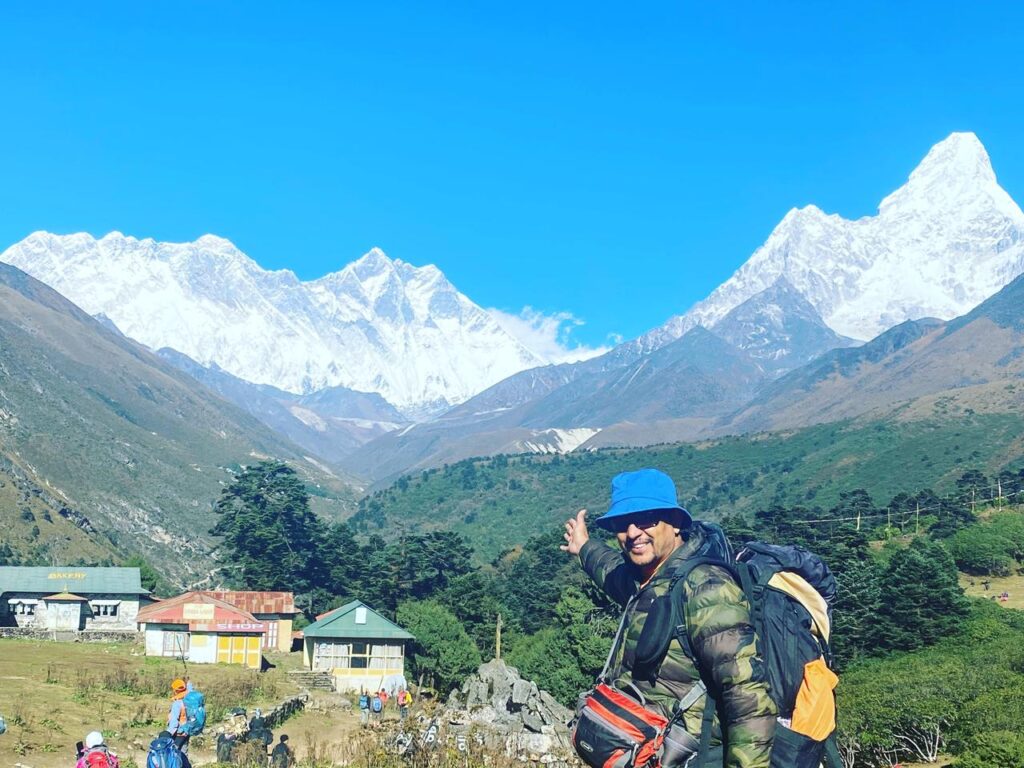
Staying connected on a Nepal trek is no longer optional for most trekkers, whether you want to upload daily photos, check weather forecasts, or message home that you are safe. This WiFi, mobile network, and eSIM guide for Nepal trekkers explains what actually works on the Everest, Annapurna, and Manaslu routes in 2026, what to buy in Kathmandu before you fly out, and how to avoid the USD 20-per-trek mistake most travelers make.

Mobile Network Coverage on Nepal Trekking Routes
Nepal has two main mobile operators: Nepal Telecom (NTC, government-owned) and Ncell (private). NTC has the widest coverage in remote trekking areas and is the only network that reliably works in the Manaslu, Dolpo, and Kanchenjunga regions. Ncell has stronger coverage in the Annapurna region up to about 3,500 m but is unreliable above Namche in the Everest region.
On the Everest Base Camp trek, you will get a 4G signal in Lukla, Phakding, Namche, Tengboche, and sometimes Pheriche. Above Dingboche the signal becomes patchy and disappears completely by Lobuche and Gorak Shep. On the Annapurna Circuit and Annapurna Base Camp trek, Ncell 4G covers most villages up to 4,000 m. Manaslu has signal in Soti Khola, Machha Khola, and Samagaon, with patches of 3G in between. For an offline backup, download maps on Google Maps or Maps.me before you fly to Lukla.
Buying a Nepal SIM Card: NTC vs Ncell
Buy your Nepal SIM at Tribhuvan International Airport upon arrival, or at any NTC/Ncell office in Thamel. You will need your passport, one passport photo, and a visa stamp in your passport. A tourist NTC SIM costs NPR 100-200 plus a data package. The popular 10 GB / 30-day pack costs around NPR 800-1,200 and is plenty for a 14-day trek if you avoid video calls.
Ncell offers a Tourist Pack with 15 GB for NPR 1,200 valid for 15 days. Ncell has faster 4G in cities and the Annapurna region but does not work above Namche. For trekkers heading to remote areas like Manaslu or Dolpo, NTC is the safer bet. Always test your SIM in Kathmandu before flying to the trailhead, and save your NTC recharge USSD codes (*400#) for offline top-ups.
eSIM Options for Nepal Trekkers
Nepal does not yet have a fully native eSIM from NTC or Ncell for tourists, but international eSIM providers like Airalo, Holafly, and Nomad offer Nepal data eSIMs that work on the Ncell network. A 5 GB Nepal eSIM costs around USD 11-15, and a 10 GB pack runs USD 18-25. eSIMs are perfect if your phone is unlocked and you want to skip the Kathmandu SIM-card queue, but they only give you data, no local phone number for calls or SMS.
- Airalo Nepal eSIM: 5 GB / 30 days for USD 11. Uses Ncell network. Best coverage in cities and Annapurna.
- Holafly Nepal eSIM: Unlimited data for USD 47 / 15 days. Useful for content creators uploading daily.
- Nomad Nepal eSIM: 10 GB / 30 days for USD 19. Good fallback if NTC SIM is sold out at the airport.
- NTC physical SIM: Best for Manaslu, Dolpo, Kanchenjunga, and other remote regions.
WiFi at Tea Houses: Everest Link vs Lodge WiFi
On the Everest Base Camp route, Everest Link is the dominant WiFi provider. You buy a voucher at Namche or Lukla: 10 GB for NPR 1,700, 20 GB for NPR 2,800, or unlimited 30 GB for NPR 3,500. Everest Link works in most villages from Lukla to Gorak Shep but slows dramatically in the evening when every trekker is uploading photos. On the Annapurna route, many teahouses offer free WiFi if you eat dinner there; otherwise expect to pay NPR 200-500 per day.
Manaslu teahouses usually charge NPR 200-300 per day for slow WiFi that may only work in the dining hall. Always ask whether WiFi is included before ordering, and avoid relying on it for important calls or work. For more on teahouse pricing, see our tea house price guide.
Power and Charging: The Hidden Cost of Connectivity
Every device you connect needs power, and charging is the most overlooked budget item on a Nepal trek. Teahouses charge NPR 100-400 per full charge, or NPR 200-500 per hour. A 20,000 mAh power bank costs NPR 5,000-8,000 in Namche versus NPR 3,500 in Kathmandu, so buy one before you fly. A small solar panel (10-20W) is a smart backup for long remote treks like Upper Dolpo or Kanchenjunga. See our full charging electronics guide for the complete power strategy.
Frequently Asked Questions (FAQ)
Does my home mobile plan work in Nepal?
Most international plans offer Nepal roaming at USD 5-15 per MB, which becomes prohibitively expensive after a few photos. Disable data roaming at the airport and buy a local NTC SIM or an Airalo eSIM instead. You will save USD 50-200 per trek.
Is there WiFi at Everest Base Camp?
Not at Base Camp itself (5,364 m). The last reliable WiFi is at Gorak Shep, the night-stop before Base Camp. Everest Link works in Gorak Shep but is slow and often oversubscribed. Download anything you need before reaching Lobuche.
Can I use Starlink or satellite internet in Nepal?
Starlink is not licensed for tourist use in Nepal. Satellite phones and Iridium GO devices are technically allowed with a permit from the Nepal Telecommunications Authority, but most trekkers find NTC + Everest Link sufficient.
How much data do I need for a 14-day Nepal trek?
For messaging, occasional photos, and daily weather checks, 5-10 GB is plenty. For uploading daily video stories or working remotely, plan for 20-30 GB. Offline maps on Maps.me and Google Maps use almost no data once downloaded.
Book your Nepal trek with Trek Pathways and we will help you buy the right SIM, install your eSIM, and arrange charging at every teahouse along the route. Explore our Everest Base Camp Trek or Manaslu Circuit Trek packages today.
 English
  Deutsch
  Français
  Português
  Español
0 Comment