
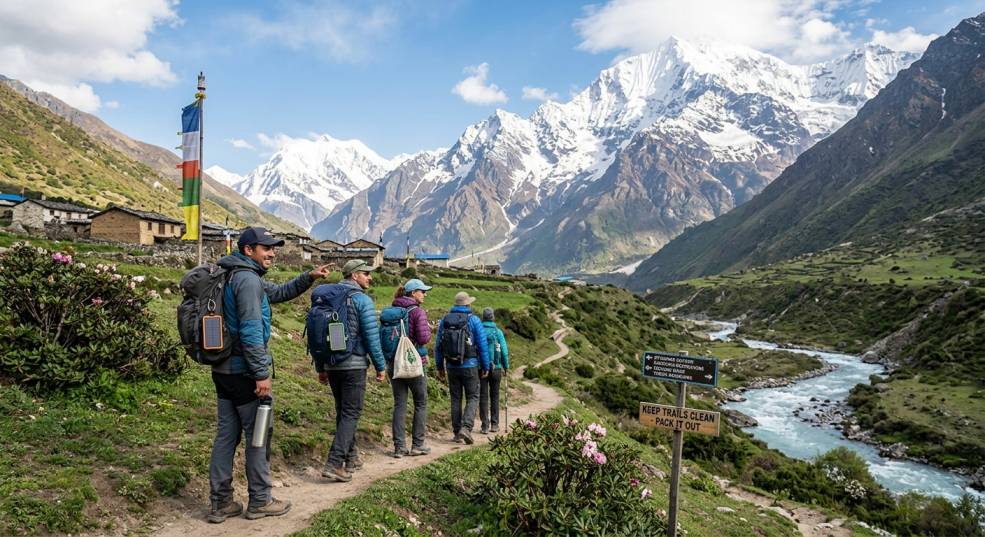
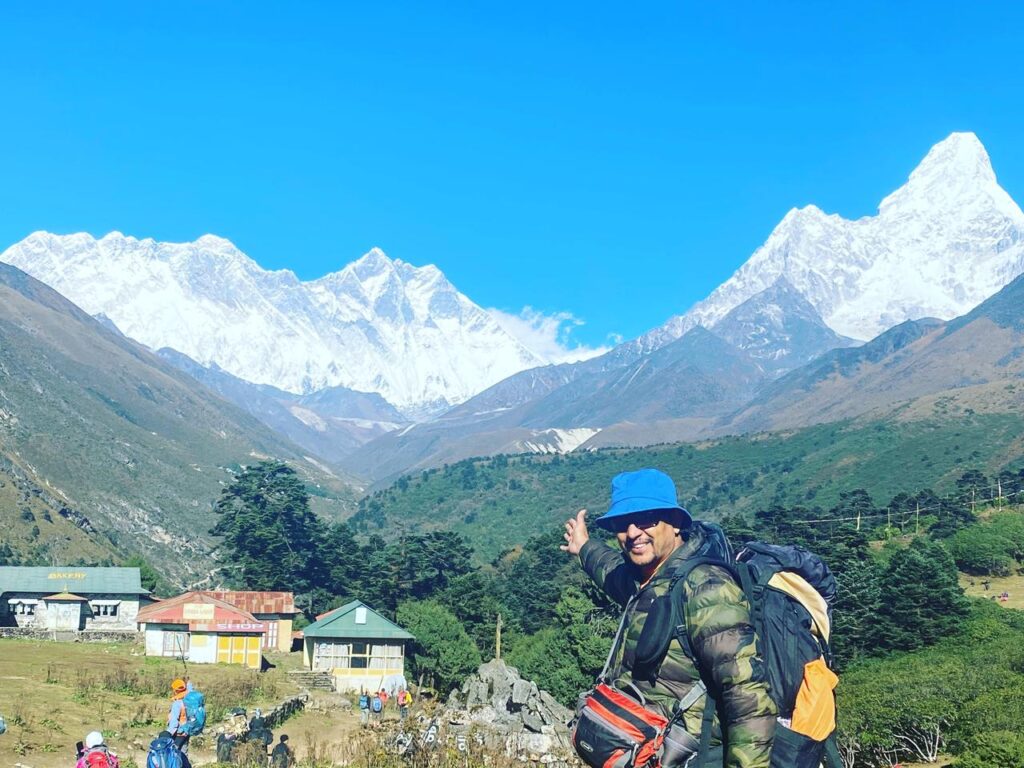
Trekking in Nepal is a low-carbon activity compared to most forms of travel — you walk, sleep in teahouses, and eat local food. But the international flight to Kathmandu, domestic flights to trailheads, and helicopter rescues all contribute to your carbon footprint. This guide shows you how to minimize carbon emissions on a Nepal trek, from flight choices to teahouse selection, without sacrificing the experience.

The Carbon Footprint of a Nepal Trek
A typical 14-day Nepal trek from Europe or North America generates 3-5 tons of CO2 equivalent per trekker. The international flight accounts for 70-80% of this (2-4 tons). Domestic flights (Kathmandu-Lukla, Pokhara flights) add 200-400 kg. On-trail emissions (teahouse heating, cooking, charging) are 50-100 kg. Helicopter rescues, when they happen, add 500-1,000 kg. The good news: walking itself is zero-emission, and choosing the right teahouse and transport can cut your footprint significantly.
| Activity | CO2 (kg) | Reduction strategy |
|---|---|---|
| International flight (round trip) | 2,000-4,000 | Direct flights, economy class, carbon offset |
| Kathmandu to Lukla flight (RT) | 200-300 | Walk in/out via Jiri or Salleri |
| Kathmandu to Pokhara flight (RT) | 150-250 | Take tourist bus (10 kg vs 200 kg) |
| Helicopter rescue (if needed) | 500-1,000 | Acclimatize properly to avoid |
| Teahouse heating (14 days) | 30-50 | Choose solar-powered teahouses |
| Charging electronics (14 days) | 10-20 | Bring power bank, use sparingly |
| Bottled water (14 days) | 20-30 | Bring water filter, eliminate plastic |
| Total typical trek | 3,000-5,000 | Reduction of 30-50% possible |
Choosing Lower-Carbon Flights
Your international flight is the biggest single source of emissions. Choose direct flights where possible (each takeoff and landing adds 100-200 kg of CO2). Fly economy class — business class emits 3-4x more per passenger. Choose airlines with newer, fuel-efficient fleets (Singapore Airlines, Qatar Airways, Emirates all have modern A350s and 787s on Kathmandu routes). Book through Skyscanner, which shows the carbon footprint of each flight option and ranks by lowest emissions.
For domestic flights, consider ground transport alternatives. Kathmandu to Pokhara by tourist bus (7 hours, USD 10) emits 10 kg of CO2 versus 200 kg by flight. The new Kathmandu-Pokhara highway makes this comfortable. For EBC, the classic walk-in via Jiri adds 5-7 days but eliminates the Lukla flight entirely. See our transportation guide for ground options.
Choosing Eco-Friendly Teahouses
Teahouse energy use varies wildly. Some use solar panels for electricity and hot water; others burn kerosene or yak dung for everything. Ask your guide to choose teahouses with solar power, LED lighting, and gas cooking (not wood). Look for the “Eco Lodge” certification that some regions now use. In Sagarmatha National Park, the Khumbu Climbing Center has trained teahouse owners in energy efficiency, and many lodges in Namche now have solar hot water.
- Choose teahouses with solar panels: Visible on the roof. Means lower kerosene use.
- Ask about gas vs wood cooking: Gas is cleaner. Wood is scarce above 3,500 m.
- Take cold showers when possible: Solar-bag showers use no kerosene.
- Charge devices during peak solar hours: 11 AM – 3 PM.
- Turn off lights when leaving the dining hall: Many teahouses forget.
- Choose teahouses with composting toilets: Some newer lodges in Annapurna have these.
Food Choices That Reduce Carbon
Vegetarian meals have 50-70% lower carbon footprint than meat meals, especially at altitude where meat is flown or carried up unrefrigerated. Dal bhat (lentils and rice) is the lowest-carbon meal on any Nepal teahouse menu — locally grown, vegetarian, and cooked on gas stoves. Avoid imported Western foods like pizza, pasta, and bottled beer, which have high transport emissions. Drink local tea instead of imported coffee. Choose seasonal vegetables over imported fruit.
See our food menu guide for the full low-carbon meal strategy. A vegetarian dal-bhat-based diet on a 14-day trek saves 30-50 kg of CO2 versus a Western omnivore diet.
Gear Choices That Matter
Buy quality gear that lasts 10+ years instead of cheap gear you replace annually. Rent large items (down jacket, sleeping bag) in Kathmandu rather than buying new for one trek — see our Alugar x guia de compra. Choose gear made from recycled materials (Patagonia, Black Diamond, Outdoor Research all have recycled lines). Repair rather than replace — many gear shops in Thamel offer patching and zipper repair. Donate used gear to trekking staff at the end of your trek rather than throwing it away.
Carbon Offset Options for Nepal Trekkers
Even with all reductions, your international flight still emits 2-4 tons of CO2. Offset this through verified programs. Recommended options: MyClimate (Swiss non-profit, supports a Nepal biogas project), Gold Standard (founded by WWF, certifies high-quality offsets), and Cool Effect (transparent, low-overhead). Avoid cheap offset programs that lack third-party verification. A typical 3-ton offset costs USD 30-90, a small fraction of your trek cost. See our Guia de não deixar nenhum rastreio for broader sustainability practices.
The Future of Sustainable Trekking in Nepal
Nepal’s trekking industry is slowly moving toward sustainability. Sagarmatha National Park banned single-use plastic bottles in 2020. Several teahouse associations have adopted solar power. The Nepal Tourism Board launched the “Sustainable Tourism” certification in 2023. Trekking agencies like Trek Pathways are leading the way with plastic-free policies, porter welfare standards, and Leave No Trace training. As a trekker, your choices drive this transition: choose sustainable agencies, refuse plastic, and offset your flights.
Perguntas Frequentes (FAQ)
What is the carbon footprint of a Nepal trek?
A typical 14-day Nepal trek from Europe or North America generates 3-5 tons of CO2 equivalent per trekker. The international flight accounts for 70-80% of this. Domestic flights, teahouse energy, and helicopter rescues (when needed) add the rest. Walking itself is zero-emission. Reductions of 30-50% are possible with smart choices.
Should I offset my flight to Nepal?
Yes. Even with all reductions, your international flight still emits 2-4 tons of CO2. Offset through verified programs like MyClimate (which supports a Nepal biogas project), Gold Standard, or Cool Effect. A 3-ton offset costs USD 30-90. Avoid cheap offset programs without third-party verification. Offsetting is not perfect, but it is better than doing nothing.
Are electric vehicles available for trailhead transport in Nepal?
Limited. Kathmandu has a few electric taxis, and Pokhara has electric tourist buses on some routes. Most trailhead jeeps are diesel. The Nepali government has announced plans to electrify tourist transport by 2030, but adoption is slow. For now, the lowest-carbon trailhead transport is shared tourist buses and electric-equipped private jeeps. Ask your agency about EV options.
How do I choose a sustainable Nepal trekking agency?
Look for: plastic-free policies (group water filters, no bottled water), porter welfare (proper gear, insurance, fair wages), solar-powered teahouse partnerships, Leave No Trace training, local ownership and employment, and support for conservation projects. Ask for their environmental policy in writing. Trek Pathways publishes its sustainability policy online.
Trek Pathways is committed to carbon-friendly trekking: group water filters, plastic-free policies, solar teahouse partnerships, and porter welfare standards. Browse our Manaslu Circuito De Caminhada, O Acampamento Base Do Everest Trek, ou Circuito Annapurna Trek packages for sustainable Himalayan adventures.

 English
  Deutsch
  Français
  Português
  Español
0 Comment