
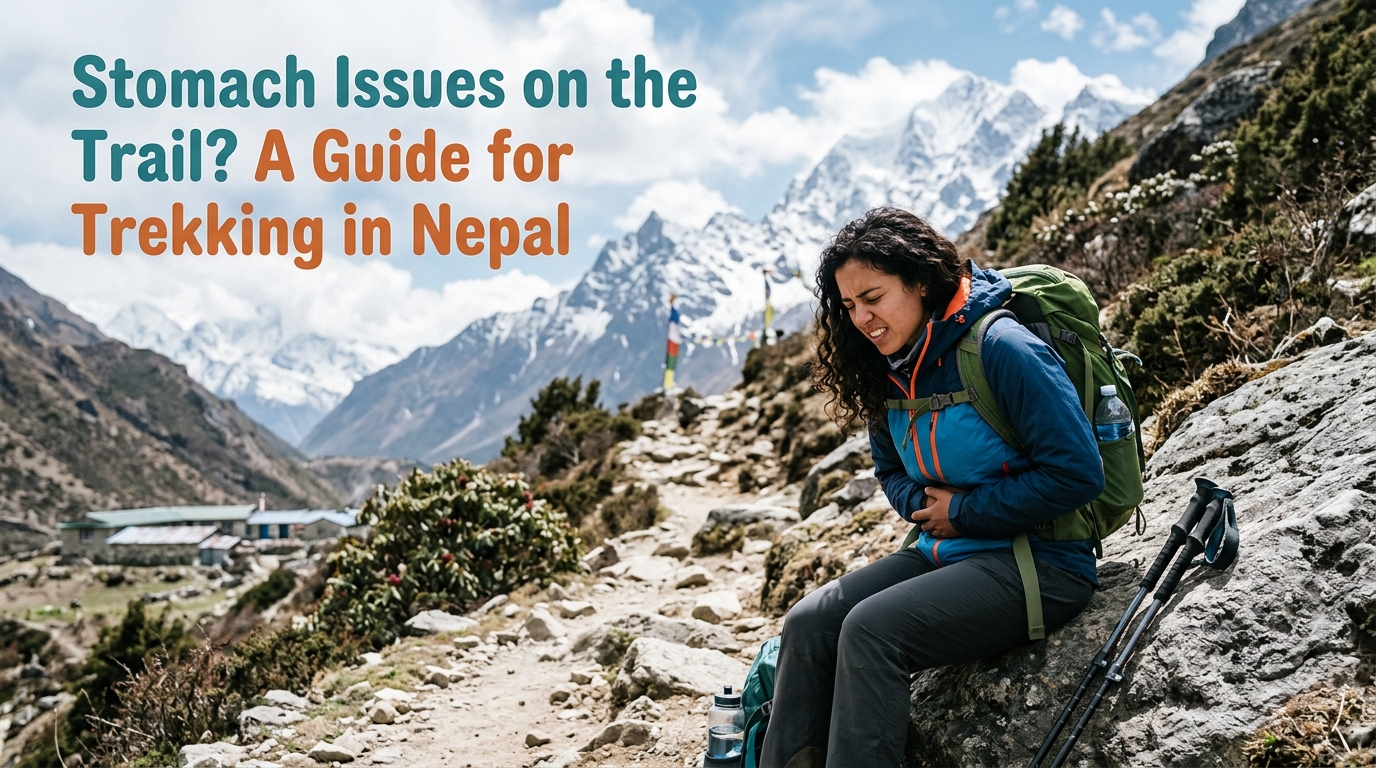
Up to 70% of Nepal trekkers experience some form of stomach issue during their trek, ranging from mild bloating to full-blown dysentery that ends the trip. The good news: 90% of these cases are preventable with simple food and water rules. This guide covers what causes stomach problems on Nepal treks, how to avoid them, and what to do if you get sick despite your best efforts.

What Causes Stomach Problems on Nepal Treks?
The four main culprits are contaminated water, undercooked food, poor hand hygiene, and altitude-related digestive changes. Nepal’s tap water contains bacteria (E. coli, salmonella), protozoa (Giardia, Cryptosporidium), and sometimes viruses. Teahouse kitchens vary wildly in cleanliness; some use untreated water to wash vegetables, and flies are common at lower altitudes. Hand sanitizer is essential because most bathrooms lack running water for handwashing.
Altitude itself also affects digestion. Above 3,500 m, your body redirects blood from your digestive system to your brain and muscles, which slows digestion and causes nausea, bloating, and loss of appetite. This is normal altitude response, not food poisoning. The fix is to eat smaller, more frequent meals and stay hydrated. For full altitude sickness prevention, see our altitude acclimatization guide.
The 10 Food and Water Safety Rules
- Drink only treated water: Filtered, boiled, UV-purified, or chemically treated. Never tap water. See our drinking water guide.
- Avoid raw salads and unpeeled fruit: Eat only cooked vegetables and fruit you peel yourself (banana, orange).
- Order hot, freshly cooked food: If it is not steaming when it arrives, send it back.
- Skip meat above 3,500 m: It is carried up unrefrigerated. Stick to vegetarian dishes.
- Avoid ice: Made from tap water. Order drinks without ice.
- Brush teeth with treated water: Not tap water. Even a small sip of tap water can cause illness.
- Wash hands before every meal: Use hand sanitizer with 60%+ alcohol. Most teahouses lack soap.
- Avoid yak cheese if sensitive: Very rich and can cause stomach upset.
- Limit alcohol at altitude: Dehydrates and irritates the stomach lining.
- Bring your own utensils: Some teahouses do not wash spoons thoroughly.
Best Foods to Eat (and Avoid) on the Trail
The safest meals on a Nepal trek are dal bhat (rice and lentils, boiled thoroughly), Sherpa stew (thick soup with vegetables and noodles), thukpa (Tibetan noodle soup), and momos (steamed dumplings). All of these are cooked at high heat for extended periods, killing most pathogens. Fried rice and chowmein are also safe if served piping hot. Avoid pizza and pasta above 4,000 m — the cheese and sauce may have been sitting at room temperature for hours.
For snacks, bring sealed energy bars from home, hard candies, and electrolyte tablets. Avoid local dairy products like curd (yogurt) and lassi above 3,000 m unless you are certain of the source. For the full menu breakdown with safe choices, see our Nepal trekking food menu guide.
The Stomach Problem First-Aid Kit
Every Nepal trekker should carry a basic stomach-care kit. These items are available in Kathmandu pharmacies, but bring your own to ensure quality and dosage familiarity.
- Imodium (Loperamide): 10 tablets for symptom control during travel. Does not cure, but stops diarrhea.
- Antibiotics (Ciprofloxacin 500mg or Azithromycin 500mg): 6 tablets for bacterial diarrhea. Take 1 pill twice daily for 3 days.
- Oral Rehydration Salts (ORS): 10 sachets. Mix with treated water and drink after every episode of diarrhea.
- Pepto-Bismol tablets: 20 tablets for mild nausea and stomach upset.
- Activated charcoal tablets: 20 tablets for food poisoning. Take 4 tablets after suspected bad food.
- Probiotics (Saccharomyces boulardii): 14 capsules. Take daily to maintain gut flora.
- Antacid (Tums or Rennie): 20 tablets for acid reflux from spicy food.
What to Do If You Get Sick on the Trail
If you develop diarrhea or vomiting on a Nepal trek, the priority is hydration. Drink ORS solution continuously (1 liter every 2-3 hours). Stop trekking for the day; do not push through illness at altitude. Rest at a teahouse, eat only plain rice, plain dal, or Tibetan bread, and avoid dairy, fat, and spice. If symptoms persist more than 24 hours, start antibiotics (Ciprofloxacin 500mg twice daily for 3 days). If you develop fever, bloody stool, or severe abdominal pain, arrange a helicopter rescue — these may indicate dysentery or appendicitis. See our helicopter rescue guide for the protocol.
For travel insurance that covers helicopter rescue and medical evacuation, see our best travel insurance guide. Never trek without insurance that includes helicopter rescue above 5,000 m.
Frequently Asked Questions (FAQ)
Is it normal to have stomach issues on a Nepal trek?
Mild bloating, appetite loss, and irregular bowel movements are normal at altitude. Severe diarrhea, vomiting, or fever are NOT normal and require treatment. About 50-70% of trekkers experience some stomach issue during their trek, but most cases are mild and resolve within 24-48 hours.
Can I take Imodium to keep trekking with diarrhea?
Yes, for short-term symptom control. Imodium stops diarrhea but does not treat the underlying cause. Use it to descend to a lower altitude or reach a teahouse, not to push through a high pass. Take with plenty of ORS solution. If symptoms persist more than 48 hours, start antibiotics.
Should I take antibiotics preventively on a Nepal trek?
No. Prophylactic antibiotics increase resistance and disrupt gut flora. Take them only when symptoms develop: 3+ loose stools in 24 hours, fever, or bloody stool. Ciprofloxacin 500mg twice daily for 3 days treats most bacterial causes. Carry your own prescription from home.
Can I drink tap water if I brush my teeth carefully?
No. Even small amounts of tap water contain enough bacteria to cause illness. Use treated water (filtered, boiled, or bottled) for brushing teeth, rinsing your toothbrush, and rinsing your mouth after brushing. This is one of the easiest prevention measures.
Trek Pathways guides are trained in wilderness first aid and carry group medical kits. Browse our Manaslu Circuit Trek or Everest Base Camp Trek packages for a safer Himalayan experience.

 English
  Deutsch
  Français
  Português
  Español
0 Comment