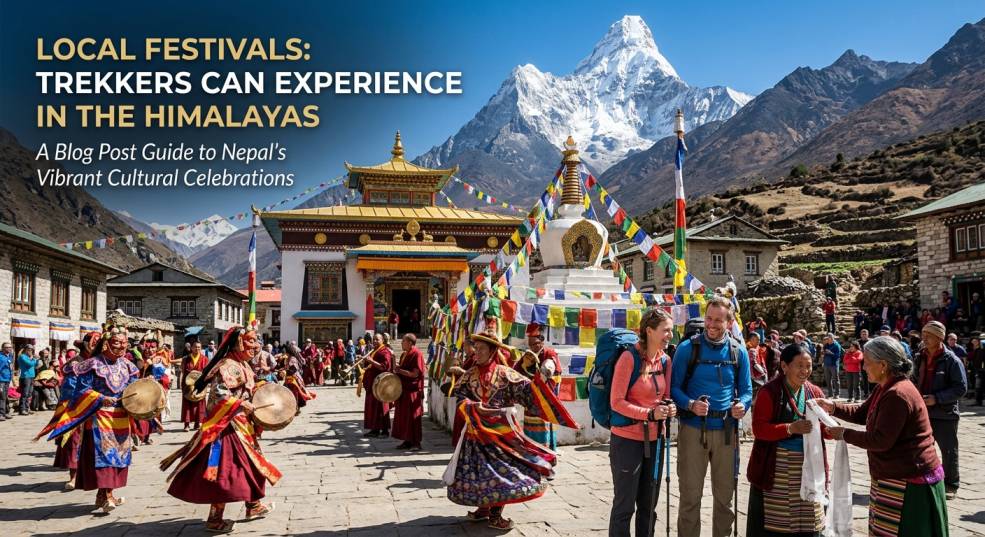
Timing your Nepal trek to coincide with a local festival is one of the most rewarding cultural experiences you can have. Whether it is the masked dances of Mani Rimdu at Tengboche, the lights of Tihar in Kathmandu, or the Tibetan New Year celebrations in Mustang, festivals add a layer of depth that no amount of mountain scenery can match. This guide covers the festivals trekkers can experience, with 2026 dates, where to be, and etiquette tips.

Major Festivals in Nepal’s Himalayan Regions (2026)
| Festival | 2026 dates | Region | Where to experience |
|---|---|---|---|
| Dashain | Oct 9-21, 2026 | All Nepal | Kathmandu, Pokhara, village teahouses |
| Tihar (Deepawali) | Oct 28-Nov 1, 2026 | All Nepal | Kathmandu, Pokhara, trailhead villages |
| Mani Rimdu | Nov 6-8, 2026 (approx) | Everest (Khumbu) | Tengboche Monastery |
| Losar (Tibetan New Year) | Feb 21, 2026 | Mustang, Manaslu, Dolpo | Lo Manthang, Samagaon |
| Saga Dawa | May 31, 2026 | All Buddhist regions | Boudhanath, Swayambhu, Lumbini |
| Holi | Mar 7, 2026 | Kathmandu, Pokhara | Kathmandu Durbar Square |
| Shivaratri | Feb 21, 2026 | Pashupatinath | Pashupatinath Temple, Kathmandu |
| Buddha Jayanti | May 23, 2026 | Lumbini, Boudhanath | Lumbini, Swayambhu |
| Janai Purnima | Aug 19, 2026 | All Nepal | Gosaikunda Lake trek |
| Indra Jatra | Sep 7-9, 2026 | Kathmandu | Kathmandu Durbar Square |
Dashain: Nepal’s Biggest Festival
Dashain is the longest and most important Hindu festival in Nepal, lasting 15 days in late September or October. It celebrates the victory of good over evil, with families gathering for tika (red vermillion paste on the forehead), jamara (yellow grass sprouts), blessings from elders, and feasts of goat meat and sel roti (sweet bread). On trekking routes, teahouses may be quieter as staff return home to their families, but you may be invited to join a family celebration in a village — a rare and treasured experience.
The first, seventh, eighth, ninth, and tenth days of Dashain are the most important. Most offices close for the entire 15-day period, and travel becomes crowded. If you trek during Dashain, expect more domestic tourists on popular routes like Poon Hill and Sarangkot. Plan transport and teahouse bookings well in advance. See our best months guide for festival-season trekking advice.
Tihar: The Festival of Lights
Tihar (Deepawali) is a 5-day Hindu festival in late October or early November, celebrating light over darkness. Each day honors a different animal or relationship: crows, dogs, cows, oxen, and finally brothers and sisters. Homes and streets are decorated with oil lamps, candles, and colorful rangoli (sand designs). In Kathmandu and Pokhara, the entire city glows. On the trail, teahouses are decorated with marigold garlands and diyas (small oil lamps).
The third day of Tihar (Laxmi Puja) is the most spectacular, with every home illuminated to invite the goddess of wealth. The fifth day (Bhai Tika) sees sisters putting tika on their brothers’ foreheads for protection and longevity. If you are in Kathmandu during Tihar, do not miss the lit-up Durbar Square and the singing deusi-bhailo troupes that go door to door collecting treats. Combine with a trek before or after.
Mani Rimdu: Buddhist Masked Dances at Tengboche
Mani Rimdu is the most important Buddhist festival in the Everest region, held at Tengboche Monastery over 19 days in October-November (public performance on the third day). Monks wear elaborate masks representing Buddhist deities and perform sacred cham dances symbolizing the victory of Buddhism over the Bon religion. The festival ends with the destruction of a sand mandala, symbolizing impermanence. Trekkers on the EBC route can attend the public performance day with a small donation.
Mani Rimdu dates are set by the Tibetan lunar calendar and confirmed only a few months in advance. For 2026, the expected dates are November 6-8. Book your EBC trek to coincide with the public performance day. See our Everest Base Camp Trek package and request Mani Rimdu timing. Bring a jacket — it gets cold sitting in the monastery courtyard for 4+ hours.
Losar: Tibetan New Year in Mustang and Manaslu
Losar is the Tibetan Buddhist New Year, celebrated in February in the Mustang, Manaslu, Dolpo, and Sherpa regions. Festivities last 3-15 days with family feasts, archery competitions, horse races, dancing, and the famous cham dances at major monasteries. The largest celebration is in Lo Manthang (Upper Mustang), where the King of Mustang hosts a public celebration. In Namche Bazaar, Sherpa families celebrate with traditional dances and feasts.
Losar in February means cold trekking weather, but the cultural immersion is unmatched. Pack warm layers and expect teahouses to be full of celebrating local families. The Upper Mustang Trek during Losar is a once-in-a-lifetime cultural experience. See our Manaslu Circuit Trek for Sherpa Losar in the Manaslu region.
Festival Etiquette for Trekkers
- Dress modestly: Long pants/skirt and shirt with sleeves, especially in Hindu temples and Buddhist monasteries.
- Ask before photographing: Especially rituals, pujas, and family celebrations.
- Bring small gifts: For host families (fruit, sweets, pens for children). Avoid money.
- Participate when invited: Accept tika on your forehead, join dances if invited.
- Do not interrupt rituals: Watch quietly from a respectful distance.
- Bring festive snacks: Sel roti, fruits, or chocolates to share.
- Respect closures: Some teahouses and shops close during Dashain. Plan ahead.
- Learn festival greetings: “Dashain ko subhakamana” (Happy Dashain), “Losar tungjang” (Happy Losar).
Frequently Asked Questions (FAQ)
What is the best festival to experience during a Nepal trek?
Mani Rimdu at Tengboche (November 6-8, 2026) is the most spectacular festival for trekkers, with masked cham dances by monks. Dashain (October 9-21, 2026) and Tihar (October 28-November 1, 2026) are easier to experience in Kathmandu or Pokhara before or after your trek. Losar (February 21, 2026) in Upper Mustang is the deepest cultural immersion.
Are teahouses open during Nepal festivals?
Most teahouses remain open during festivals, but some family-run teahouses may close for a few days during Dashain (October) as staff return home. Book your teahouses in advance during festival periods. On the main EBC, Annapurna, and Manaslu routes, you will always find accommodation, but it may be limited in smaller villages.
Can tourists participate in Nepal festivals?
Yes, tourists are welcomed at most festivals. At Tihar, you may receive tika from teahouse owners. At Mani Rimdu, you can observe the cham dances from the courtyard. At Losar in Mustang, you may be invited to family feasts. Always ask permission before photographing, dress modestly, and bring small gifts (fruit, sweets) if invited to a home.
Do I need to book treks in advance during festival seasons?
Yes, especially for Mani Rimdu (November) and Dashain (October). These are peak trekking seasons with high demand for permits, flights, and teahouses. Book 2-3 months in advance to secure Lukla flights and preferred teahouses. For Losar (February), book 1-2 months in advance; this is shoulder season but requires special permits for Mustang and Manaslu.
Trek Pathways offers festival-timed Nepal treks with cultural briefings from local guides. Browse our Everest Base Camp Trek for Mani Rimdu, Upper Mustang Trek for Losar, or Manaslu Circuit Trek for cultural immersion.

 English
  Deutsch
  Français
  Português
  Español
0 Comment