
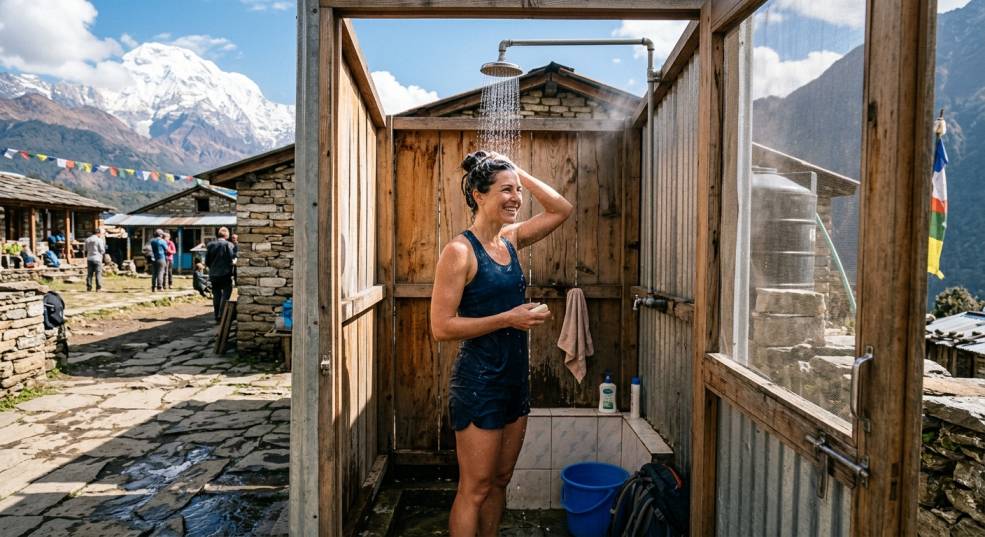
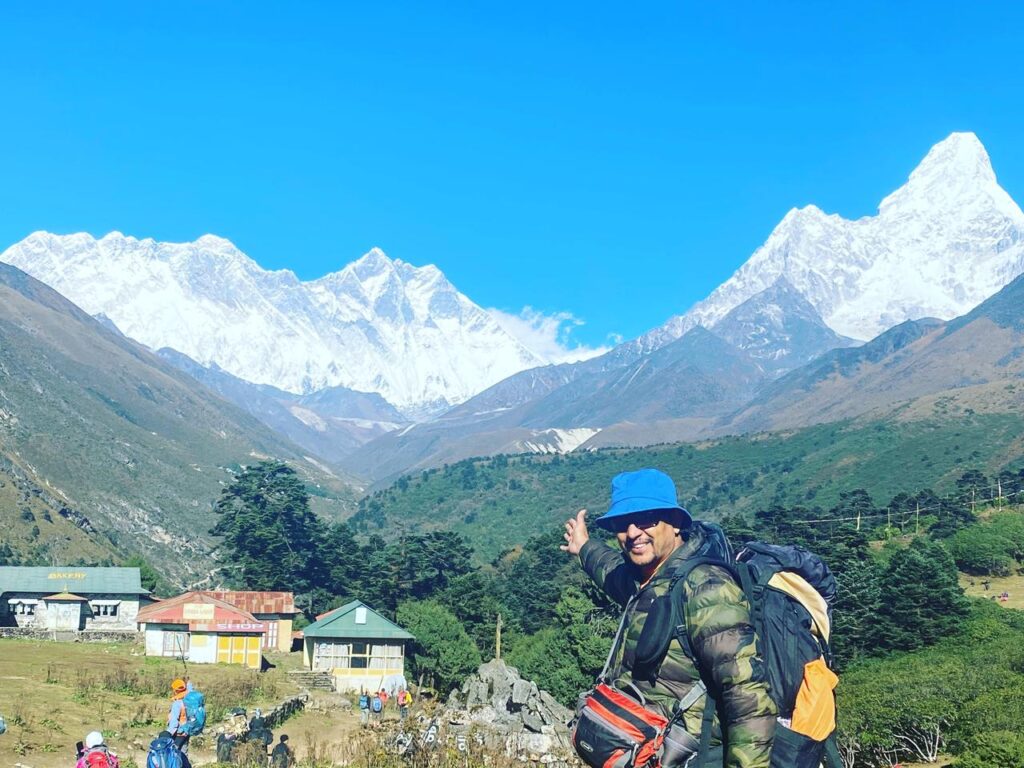
After 5 days of trekking in dust, sun, and sweat, the idea of a hot shower becomes an obsession. But Himalayan teahouse showers are a mixed bag: some are glorious, some are a dribble of lukewarm water in a freezing room. This guide explains what to expect, what each type of shower costs, and when to embrace the wet-wipe alternative.

Types of Showers at Nepal Teahouses
There are four main types of showers at Nepal teahouses, each with different cost and quality. Knowing what to expect helps you decide whether to pay for the shower or break out the baby wipes.
- Solar-bag shower: Black plastic bag filled with water, hung in the sun all day, gravity-fed through a hose. Cost: NPR 100-300. Best in sunny weather, lukewarm at best, cold by evening.
- Gas-heated shower: Propane-heated water tank, real showerhead. Cost: NPR 200-500. Hot and reliable. Most common in Namche, Manang, and Samagaon.
- Bucket shower: A bucket of hot water delivered to your bathroom, with a small cup to pour over yourself. Cost: NPR 100-300. Reliable but minimal.
- Electric shower: On-demand electric water heater. Cost: NPR 200-400. Hot but unreliable; often broken in smaller teahouses.
Shower Prices by Region and Altitude
| Region | Lower altitude (NPR) | Mid altitude (NPR) | High altitude (NPR) |
|---|---|---|---|
| Everest (Khumbu) | 200-400 | 300-500 | 400-700 |
| Annapurna | 100-200 | 200-400 | 300-500 |
| Manaslu | 200-300 | 300-400 | 400-500 |
| Langtang | 100-200 | 200-300 | 300-400 |
| Mustang | 200-300 | 300-400 | 400-500 |
Some teahouses offer free showers if you order a certain amount of food (usually NPR 1,500-2,000 per person). Ask when you check in. At altitude, water is scarce and heating fuel is expensive, so the cost reflects the real resource. See our teahouse price guide for full pricing context.
Showering Strategy: When to Pay and When to Skip
Most experienced trekkers shower every 2-3 days, not every day. Daily showering at altitude increases the risk of catching a cold (temperature drops sharply after sunset), and the cost adds up — USD 30-50 over a 14-day trek. Plan showers for acclimatization days or rest afternoons when you have time to dry your hair before evening. Skip the shower on cold, cloudy, or windy days when the bathroom is freezing and you will arrive at dinner shivering.
Best shower stops on popular routes: Namche Bazaar (EBC) on acclimatization day, Manang (Annapurna Circuit) on acclimatization day, Samagaon (Manaslu) before the Larke Pass push, and Langtang Village (Langtang Valley) at the trailhead. These villages have invested in gas-heated shower systems and you can usually get a real hot shower for NPR 300-500.
What to Bring for Himalayan Trek Hygiene
Even if you shower every few days, you need a daily hygiene kit. Bring quick-dry microfiber towel (Packtowl Original S, 120 x 60 cm, 200 g), biodegradable soap (Dr. Bronner’s or Sea to Summit Wilderness Wash), travel shampoo, deodorant, toothbrush and paste, and 1-2 packs of body wipes (Dude Wipes or Surviveware). Body wipes are gold for no-shower days: strip down in your room, wipe head to toe, and you feel human again in 2 minutes. Bring unscented wipes to avoid attracting insects at lower altitudes.
How to Shower Without Getting Sick
Shower water at Nepal teahouses is usually tap water, not filtered. Do not drink it. Keep your mouth closed, and avoid splashing water into your eyes or nose. Use bottled or filtered water for final face rinse. After showering, dry off completely before stepping out — teahouse bathrooms are unheated and temperatures drop below freezing at night above 4,000 m. Dry your hair before bed to avoid catching a cold. For more on staying healthy, see our stomach problems prevention guide.
Toilet Facilities at Nepal Teahouses
Most teahouses have shared squat toilets; some newer or pricier lodges have Western-style flush toilets. Toilet paper is rarely provided — bring your own and put used paper in the waste bin, not the toilet (Nepalese plumbing cannot handle it). Above 3,500 m, water for flushing may be frozen in the morning; use the bucket provided. Hand sanitizer is essential since most bathrooms lack running water for handwashing. Luxury lodges on the EBC Luxury Trek have ensuite bathrooms with hot showers; see our luxury trek guide for what to expect at the premium end.
Frequently Asked Questions (FAQ)
Can I shower every day on a Nepal teahouse trek?
Technically yes, but it is not recommended. Daily showering at altitude increases the risk of catching a cold, costs USD 30-50 per trek, and many teahouses above 4,000 m do not have reliable hot water. Most trekkers shower every 2-3 days and use body wipes on off days.
Are showers free at Nepal teahouses?
Usually no. Showers cost NPR 100-700 depending on altitude and heating method. Some teahouses offer free showers if you order dinner and breakfast there, or if your food bill exceeds NPR 1,500-2,000. Always ask when you check in.
Is the shower water safe at Nepal teahouses?
It is tap water, not filtered. Do not drink it. Keep your mouth closed while showering and avoid getting water in your eyes or nose. Use bottled or filtered water for a final face rinse if you are concerned. The risk is low for healthy adults but high for those with compromised immune systems.
What should I do if there is no shower available?
Use body wipes (Dude Wipes, Surviveware) for a full-body wipe-down in your room. Bring a small pack towel and a bottle of filtered water to rinse your face and armpits. Change into clean base layers each evening. Most trekkers adjust to a 2-3 day shower rhythm within the first week.
Book a Trek Pathways package and we will pre-arrange shower access at every teahouse on your route, with a guaranteed hot shower at least every 2 days. Browse our Manaslu Circuit Trek or Annapurna Circuit Trek packages for comfortable teahouse accommodations throughout.

 English
  Deutsch
  Français
  Português
  Español
0 Comment